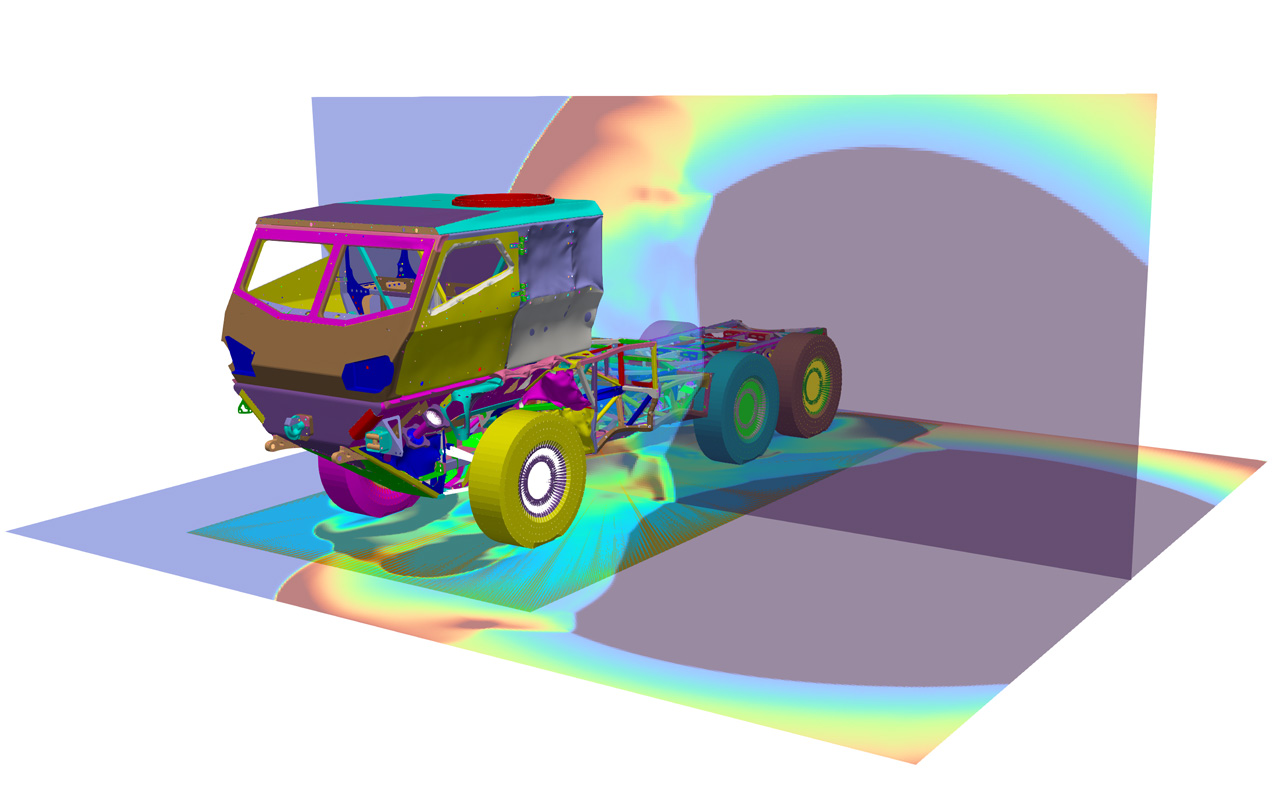
The right blast model depends on what drives the response.
Some problems can be represented efficiently by an appropriate pressure-time loading. Others require the propagation medium, material movement or fluid–structure interaction to be resolved directly. We select the modelling approach around the physics that materially affects the design decision.
Structural response is then assessed using explicit dynamics, with attention to contact, large deformation, material behaviour, failure and the acceptance criteria relevant to the programme.
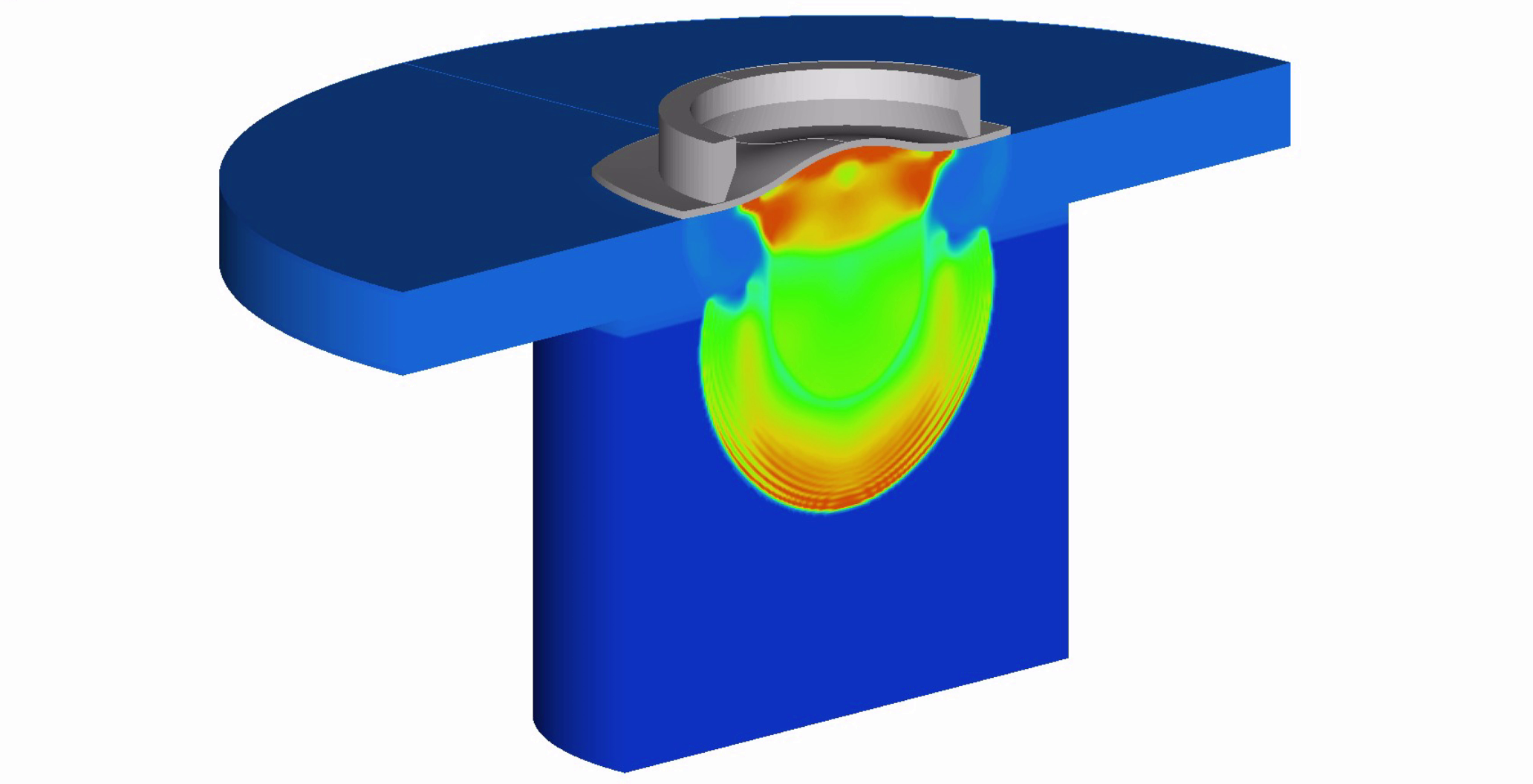
When pressure-wave propagation and material flow need to be part of the model.
An Arbitrary Lagrange–Euler formulation can represent the evolving fluid/material domain while a Lagrangian structural model captures deformation. The coupling transfers loading between the two domains through the event.
Explore FSI capabilityFrom loading environment to engineering response.
Define the threat & question
Establish the loading scenario, response measures and the acceptance criteria that matter to the programme.
Represent the loading
Use an appropriate pressure representation or resolve the propagation medium where the physics requires it.
Resolve structural response
Capture contact, deformation, material response and failure using an explicit structural solution.
Verify & interpret
Review numerical behaviour, sensitivities and engineering outputs before drawing conclusions against the requirement.
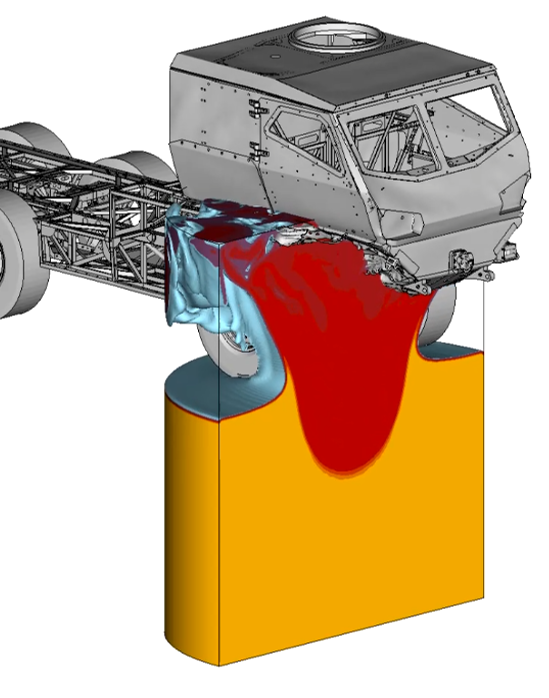
Structural survivability under extreme transient loading.
- Mine-blast and underbody protection
- Air-blast and confined-space explosions
- Shaped-charge effects and protective-system response
- Coupled interaction of sand, soil and air with structures
- Shock and equipment response
Advanced blast simulation, backed by specialist expertise.
Our experienced engineers and in-house HPC infrastructure provide the expertise and computational capacity to support demanding blast and shock assessments.